
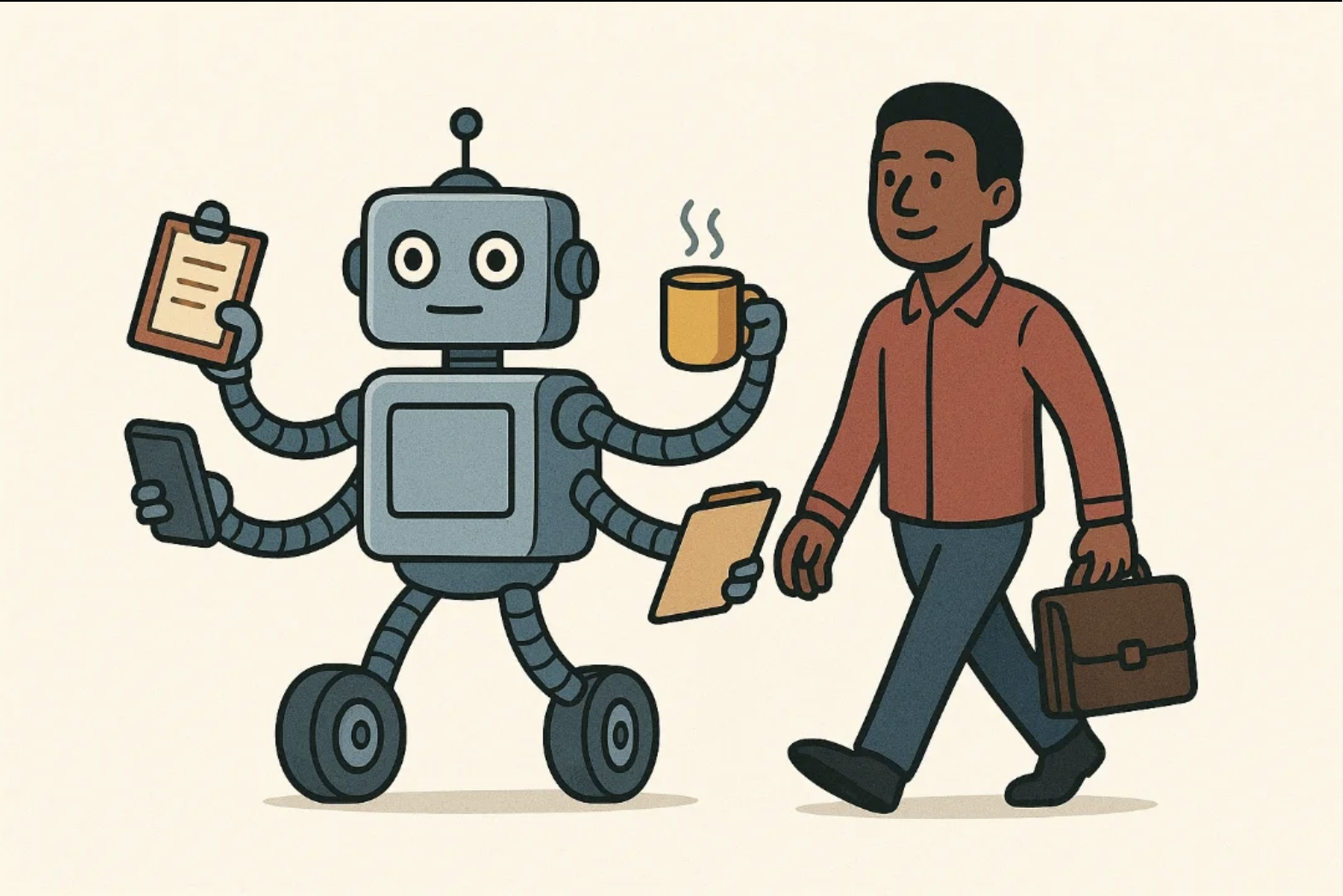
All About AI Agents
Picture this: you have a new employee who never sleeps, never calls in sick, and can handle ten tasks at once. They can browse the internet, read your emails, update your CRM, schedule meetings, and send follow-ups — all without being told twice. This employee doesn’t exist in human form, but in the world of technology, they go by the name of an AI Agent.
AI Agents are one of the most talked-about developments in technology right now, and for good reason. But like most tech buzzwords, the concept can feel abstract until you see it in action. So let’s break it down simply.
What is an AI Agent?
An AI Agent is a software program that can perceive its environment, make decisions, and take actions to achieve a specific goal — with minimal human intervention. Unlike a basic chatbot that simply responds to questions, an AI Agent can plan, execute multi-step tasks, use tools, and even course-correct when things don’t go as expected.
Think of the difference between asking someone “what’s the weather today?” and asking them to “plan my entire week based on the weather, my calendar, and my pending tasks.” The first is a simple query. The second requires judgment, context, and action. That’s the difference between a chatbot and an AI Agent.
How Do AI Agents Work?
At their core, AI Agents operate in a loop — they perceive, think, and act. They receive an instruction or goal, break it down into steps, use available tools to execute those steps, observe the results, and adjust accordingly. The tools available to an agent might include web search, code execution, email access, calendar management, CRM data, or even other AI models.
For example, a sales AI Agent might be given the goal of following up with all leads that haven’t responded in seven days. It would check the CRM, identify the relevant contacts, draft personalised follow-up emails based on each lead’s history, send them, and log the activity — all on its own.
Where Are AI Agents Being Used?
AI Agents are already showing up across industries:
- Sales and CRM — automating lead follow-ups, updating deal stages, and flagging at-risk accounts
- Customer support — resolving common issues end-to-end without escalating to a human
- Marketing — running A/B tests, analysing campaign performance, and adjusting spend
- Operations — processing invoices, managing inventory alerts, and coordinating between teams
- Research — gathering competitive intelligence, summarising reports, and flagging relevant news
What This Means for Businesses
For small and mid-sized businesses, AI Agents represent an opportunity to operate at a scale that previously required a much larger team. Tasks that used to take hours — data entry, follow-ups, report generation — can now be handled automatically, freeing up your people to focus on higher-value work like closing deals and building relationships.
The key is knowing where to deploy them. AI Agents are most effective when the task is repetitive, rule-based, and data-driven. They are not a replacement for human judgment in complex, nuanced situations — but as a force multiplier, they are hard to beat.
The Bottom Line
AI Agents are not science fiction. They are here, they are practical, and businesses that start experimenting with them now will have a significant advantage over those that wait. Whether it’s automating your CRM workflows, handling customer queries, or managing your sales pipeline, there is likely an AI Agent application that fits your business today.